Growth of Educational Consultancies in Nepal using CRMs
How a CRM Application Can Help the Day-to-Day Work of an Educational Consultancy in Nepal
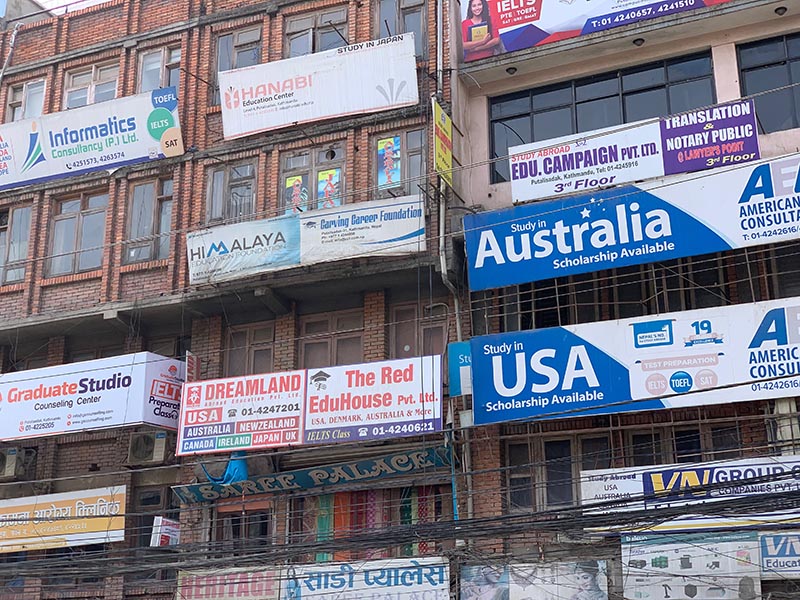
Every year, thousands of Nepali students visit educational consultancies in Kathmandu, Pokhara, Chitwan, and other cities. They come hoping to find the right path to study abroad in Australia, the USA, the UK, Canada, Japan, or South Korea. Behind every successful placement, a consultancy team is handling many tasks at once. This includes student inquiries, document collection, university applications, visa deadlines, follow-ups, and payment tracking.
As more Nepali students look to study abroad each year, consultancies that still rely on Excel sheets, WhatsApp messages, and paper files often find it hard to keep up. A CRM (Customer Relationship Management) application can help solve this problem.
In this blog, we will look at how CRM software can make daily work easier for educational consultancies, improve the student experience, and support business growth in Nepal.
What Is a CRM?
A CRM, or Customer Relationship Management system, is software that helps a business manage its interactions with customers in one place, instead of spreading that information across notebooks, spreadsheets, and multiple phones.
For an educational consultancy, the customer is the student. So a CRM helps manage every interaction with a student, from the first inquiry call to visa approval and beyond. This includes student details, communication history, application status, documents, and payments, all kept in one system that the whole team can access.
In Nepal, the education consultancy business depends a lot on trust and word of mouth. Having an organized system can change how students and parents see a consultancy.
Common Challenges Faced by Educational Consultancies in Nepal
Before looking at what a CRM can do, it helps to understand the problems most consultancies face on a daily basis:
Student data spread across registers, Excel files, and the personal phones of counselors
Missed follow-ups with students who inquired once but never came back
Confusion over document status, since it is not always clear who submitted what and what is still pending
Manual tracking of visa and application deadlines, which can lead to last-minute stress
Risk from staff turnover, since a counselor who leaves often takes student history with them
Limited visibility for management into which branch, counselor, or destination country is performing well
Difficulty managing several destination countries, such as Australia, the USA, the UK, Canada, Japan, and Korea, each with different processes and requirements
A CRM can directly address each of these problems.
How a CRM Helps With the Daily Work of an Educational Consultancy
1. Keeping Student Information in One Place
Every inquiry, whether it comes from a walk-in visitor, a Facebook ad, an education fair, or a referral, gets recorded in one system. Counselors do not need to search through several registers to find a student's history, test scores, or preferred destination.
2. Managing Leads and Follow-Ups
Much of Nepal's education consultancy business comes from inquiries made through social media, Google ads, and education fairs. A CRM can help sort leads by how likely they are to convert, assign them to specific counselors, and send reminders for follow-ups. This way, a potential student is less likely to be forgotten simply because someone was busy.
3. Tracking Applications and Documents
A CRM lets the team track each student's progress step by step. This includes inquiry, counseling, document collection, university application, offer letter, visa application, and pre-departure preparation. Everyone on the team can see what stage a student is in and what is still pending. This reduces confusion between counselors, document officers, and students.
4. Sending Deadline and Task Reminders
Visa interviews, university intake deadlines, IELTS or PTE test dates, and document expiry dates are all time-sensitive. A CRM can send automatic reminders to staff and students, which lowers the chance of missing a deadline that could affect an entire intake cycle.
5. Communicating Through SMS, Email, and WhatsApp
Many CRM systems can connect with SMS services, email, and WhatsApp, which are already common tools for Nepali students and parents. This lets a consultancy send appointment reminders, document checklists, and updates without messaging each student one by one.
6. Managing Multiple Branches and Counselors
Consultancies with branches in cities such as Kathmandu, Butwal, Biratnagar, or Pokhara can use a CRM to see how each location is performing. Management can check which branch or counselor is converting the most leads, which helps with staff evaluation and planning.
7. Getting Clear Reports and Business Insights
Instead of guessing which destination country or marketing channel brings in the most students, a CRM can generate reports on conversion rates, popular destinations, revenue by branch, and counselor performance. This gives owners real information to base decisions on.
8. Reducing Dependence on Individual Staff Members
If student data is kept only in a counselor's personal notebook or phone, the business can be affected if that person leaves. A CRM keeps student history, documents, and communication records with the organization. This protects the consultancy from disruption caused by staff turnover, which is a common issue in Nepal's consultancy sector.
9. Building Trust With Students and Parents
Parents in Nepal often come with their children to consultancies and want to understand the process clearly. A consultancy using a CRM can quickly pull up a student's full record, show the current status, and respond in an organized way. This kind of clear communication can lead to more referrals, which remain one of the main ways new students find a consultancy in Nepal.
10. Tracking Payments and Invoices
Consultancy fees, service charges, and commission tracking from partner universities or colleges can be managed within the CRM. This reduces manual bookkeeping mistakes and gives a clear view of pending payments.
Why This Matters for Nepal's Education Consultancy Industry
More Nepali students go abroad for higher education each year, and competition among consultancies is growing along with it. Doing well today depends on more than good relationships with foreign universities. It also depends on giving students and parents a process that is organized and easy to follow.
A consultancy that responds quickly, tracks documents correctly, and follows up on time is likely to build a better reputation. This matters a great deal in a market where many students choose a consultancy based on recommendations from family, friends, schools, and colleges.
Choosing the Right CRM for Your Consultancy
When looking at CRM options, a Nepali consultancy should check for the following:
Cloud-based access, so staff can work from anywhere, including during power outages or while working remotely
Support for local payment tools and communication methods, such as eSewa, Khalti, and SMS services common in Nepal
A simple interface that all staff can use comfortably, regardless of their technical background
Pricing that fits the budget of small and medium-sized consultancies
Reliable customer support, ideally with a local or regional presence
Final Thoughts
For educational consultancies in Nepal, a CRM is a practical tool that helps with everyday problems such as lost leads, missed deadlines, disorganized documents, and inconsistent communication. As the overseas education sector in Nepal becomes more competitive, consultancies that start using a CRM early will be in a better position to grow, keep staff knowledge within the organization, and give students and parents a process they can trust and recommend to others.
If your consultancy still relies on registers and scattered spreadsheets, this may be a good time to consider moving to a CRM-based way of working.
If you are looking to make your educational consultancy's daily operations more organized, a well-set-up CRM can be a useful first step toward a more structured and student-friendly business.
Himalayan CRM
Contributing author at Himalayan CRM. Passionate about providing the best CRM solutions and business insights.